
Esta é a transcrição da fala em português e inglês que o antropólogo Claudio Cavalcante Jr. gentilmente me cedeu, permitindo que eu a republicasse aqui pra tentar lhe fornecer um pouco mais de visibilidade, após sua leitura num painel de discussões intitulado “How Ukraine Can Gain Support from Brazil” em 19 de dezembro de 2025. A reunião ocorreu online, nos quadros da 4.ª Conferência Internacional Dedicada a Yuri Knorozov “Ukraine – Latin America: Geopolitical Transformations and New Forms of Interaction”. Apesar do painel se chamar “Como a Ucrânia pode ganhar apoio do Brasil”, só pude intitular a publicação daquele jeito, dado o conteúdo do texto e dado o pessimismo de que o Claudio me tem feito parte ultimamente. Fiz poucas adaptações:

Boa tarde/Boa noite! Obrigado ao Ivan Fechko (do Ukranian Prism), ao Oskar Slushchenko e o Heorhii Erman (ambos da Embaixada da Ucrânia no Brasil). Meu nome é Claudio Cavalcante Junior, sou Ph.D. em Ciências Humanas (Antropologia Cultural) pela Universidade Federal do Rio de Janeiro. Minha tese defendida em março deste ano trata de política na diáspora ucraniana no Brasil, além inserção dos ucranianos a sociedade brasileira, relações interétnicas e com o Estado brasileiro, além dos impactos da invasão em larga escala.
É difícil responder questão que intitula esse painel, então vou tentar expor como a Ucrânia ganhou o meu apoio. Eu nasci no Rio de Janeiro, onde fiz toda a minha formação acadêmica. Há quase 16 anos eu vivo no Paraná, em uma cidade no interior chamada União da Vitória, região pioneira da presença ucraniana no Brasil. Os ucranianos chegaram à região em 1896.
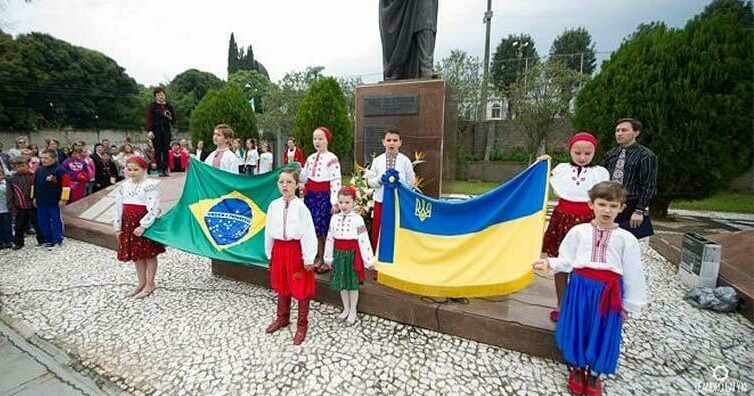
Eu moro na rua que carrega o nome do Marechal Deodoro da Fonseca, que foi o primeiro presidente do Brasil. Na mesma rua encontramos a igreja São Basílio, igreja greco-católica ucraniana, e o Clube Ucraniana de União Vitória, fundado em 1923 como União Ucraína do Brasil (Soiuz) que atualmente tem sua sede em Curitiba, capital do Paraná, e é chamada de Sociedade Ucraniana no Brasil (SUBRAS), onde desenvolvem atividades culturais. Aqui encontramos também entre a igreja e o clube, a praça da Ucrânia, onde está uma estátua de Taras Shevchenko.
Estes são alguns exemplos da visibilidade da Ucrânia e dos ucranianos em uma cidade no interior do Brasil. Resultado de mais de 130 anos da imigração ucraniana para o Brasil que pode ser dividido em três ondas. A primeira onda no final do século 19 até 1914, a segunda no Entre guerras e a terceira depois da Segunda Guerra. Os antepassados dos descendentes de ucranianos portavam, na primeira onda, passaportes austríacos (provinham do Império Austro-Húngaro), da segunda onda, da Polônia (vinham de territórios sob domínio polonês) e, na terceira onda, eram apátridas (a maioria era Ostarbeiter, vítimas de trabalhos forçadas, deportadas para Alemanha que não voltam para a Ucrânia, então completamente sob domínio soviético no pós-Segunda Guerra Mundial).
Teríamos um problema para definir quem é de “nacionalidade ucraniana” na diáspora, se nos limitássemos aos documentos, entretanto estes ucranianos permaneceram ucranianos mesmo se inserindo na sociedade brasileira ao longo de várias gerações. Mesmo assim há um envolvimento limitado de brasileiros com raízes ucranianas em ações de mobilização contra a Guerra Russo-Ucraniana, visto que são todos brasileiros. Não posso deixar de esclarecer que há um grupo de ucraniano-brasileiros fazendo um bom trabalho.
Há a presença de ucranianos de quarta onda que vieram para o Brasil a partir do restabelecimento da independência da Ucrânia em 1991. O perfil sociológico destes “novos ucranianos” é muito diferente daqueles de ondas anteriores. Estes “novos ucranianos” organizam manifestações contra a Rússia, contra a guerra, juntos com alguns cidadãos da Federação Russa e vivem em contextos distintos da diáspora ucraniana no Brasil. Mobilizações contra a invasão da Rússia a Ucrânia que ocorram (e ocorrem no Brasil) não são realizadas com frequência e contam com baixa participação. Estive duas vezes em manifestações em São Paulo (uma em 2022 e outra em 2023) e uma vez no Rio de Janeiro (neste ano).
É um desafio para os ucranianos e os brasileiros engajados nesta luta divulgar a causa ucraniana. Em meio a luta contra o imperialismo russo, tentamos divulgar que a Ucrânia, foi uma colônia russa e os objetivos de Putin na Ucrânia são apenas ações imperialistas, ilegais do ponto de vista do direito internacional. Diferentes de outros contextos não havia antes de 2014, antes do início da Guerra Russo-Ucraniana, qualquer impasse em relações a territórios que fazem parte da Ucrânia reconhecidos a partir do reestabelecimento do Estado ucraniano. Aqui no Brasil, é importante dizer, há uma certa força da propaganda russa em diferentes meios e com narrativas diversas afetando tanto aqueles que reivindicam ser “progressistas” quanto aqueles que reivindicam ser “conservadores”.
A presença russa no Brasil não é vista com desconfiança, tampouco é alvo de sanções como em outros contextos: reportagens sobre russos no mercado imobiliário de Florianópolis ou da seleção anual da filial do Escola de Balé “Bolshoi” em Joinville, ambas cidades no estado de Santa Catarina, não estabelecem um link com que está acontecendo na Ucrânia a Rússia. Há uma imagem positiva dos russos com a presença mais visível de russos que estão se estabelecendo no Brasil, deixando de lado os casos de espionagem no Brasil; são nove casos conhecidos. Há também a ação russa através do soft power, como no exemplo do Bolshoi, que frequentemente seleciona e forma bailarinos de origem periférica, com origem em projetos sociais em favelas. Talvez valha a pena citar a literatura russa, que tem muito prestígio no Brasil. Um dos caminhos na formação de uma visibilidade positiva, em especial fora de contextos no estado do Paraná, onde os ucranianos têm muita visibilidade, é através do que a embaixada da Ucrânia no Brasil no campo da diplomacia cultural.
Quanto ao governo brasileiro, este tem assumido uma posição de neutralidade pró-Rússia. O mesmo governo que em crise com o governo de Trump defendeu que não abriria mão de sua soberania. Ouvi a frase: “a soberania brasileira é inegociável”. Este mesmo governo que defende que “o Brasil é dos brasileiros”, defende que a soberania da Ucrânia é negociável, que a Ucrânia não é dos ucranianos.
Eis o desafio: a Ucrânia não é parte da Rússia, ela foi ocupada por forças estrangeiras por séculos e merece ser livre, soberana e minha luta diária como intellectuel engagé (“intelectual engajado”) é tentar divulgar nossa causa: a causa ucraniana. Os scholars no Brasil carregam usualmente sentimento antiamericano, o que estaria na base da percepção, mesmo que discreta, mais alinhada à Rússia na Guerra. As posturas adoradas por Trump favorecendo Putin na atualidade parecem não mexer com a percepção de que a Rússia é a única culpada pela guerra.
Desde 2023, eu acompanho mobilizações de professores e estudantes de universidades se engajando no “genocídio palestino” e a questão que eu coloco é: por que não há mobilização contra as violações aos direitos humanos que a Rússia comete todos os dias na Ucrânia? E as crianças ucranianas sequestradas? Eu não tenho muitas esperanças que as autoridades brasileiras se envolvam na guerra, de alguma forma contribuindo para os esforços da Ucrânia, ou mesmo que os scholars e estudantes universitários reconhecem a luta e resistência ucraniana em busca de uma paz justa e duradoura.
Quanto à população em geral, a guerra parece ser algo distante e que não faz parte do cotidiano ou das conversas diárias. Desta forma, é um desafio tentar mostrar que esta guerra é parte de um contexto mais amplo e que deve envolver todo o mundo. Tenho tentado alertar, mas com pouco sucesso, já que as preocupações são muito contextuais, seja para o governo atual ou para a população brasileira, mesmo aqueles que têm raízes ucranianas.
Good afternoon/Good evening! Thank you to Ivan Fechko (from Ukranian Prism), Oskar Slushchenko and Heorhii Erman (both from the Embassy of Ukraine in Brazil). My name is Claudio Cavalcante Junior, I have a Ph.D. in Human Sciences (Cultural Anthropology) from the Federal University of Rio de Janeiro. My thesis, defended in March of this year, deals with politics in the Ukrainian diaspora (“diáspora”) in Brazil, as well as the integration of Ukrainians into Brazilian society, interethnic relations and relations with the Brazilian State, in addition to the impacts of the large-scale invasion.
It is difficult to answer the question that titles this panel, so I will try to explain how Ukraine gained my support and how I try help Ukraine to gain support. I was born in Rio de Janeiro, where I completed all my academic training. For almost 16 years I have lived in Paraná, in a town called União da Vitória, a pioneering region of the Ukrainian presence in Brazil. The Ukrainians arrived in the region in 1896.
I live on the street that bears the name of Marechal (Marshal) Deodoro da Fonseca, who was the first president of Brazil. On the same street we find the São Basílio church, a Ukrainian Greek Catholic church, and the União Vitória Ukrainian Club, founded in 1923 as the Brazilian Ukrainian Union (Ukrainskyi Soiuz v Brazyli), which currently has its headquarters in Curitiba, the capital of Paraná, and is called the Ukrainian Society in Brazil (Sociedade Ucraniana do Brasil or SUBRAS), where it developed cultural activities. Here we also find, between the church and the club, Ukraine Square, where there is a statue of Taras Shevchenko.
These are some examples of the visibility of Ukraine and Ukrainians in a city in the interior of Brazil. This is the result of more than 130 years of Ukrainian immigration to Brazil, which can be divided into three waves. The first wave was from the end of the 19th century until 1914, the second was between the wars, and the third was after the Second World War. The ancestors of the descendants of Ukrainians carried Austrian passports in the 1st wave (they came from the Austro-Hungarian Empire), Polish passports in the 2nd wave (they came from territories under Polish rule), and in the 3rd wave, they were stateless (most were Ostarbeiter, victims of forced labor, deported to Germany and who did not return to Ukraine, then completely under Soviet rule after the Second World War).
We would have a problem defining who is of “Ukrainian nationality” in the diaspora if we limited ourselves to documents; however, these Ukrainians remained Ukrainian even after integrating into Brazilian society over several generations. Even so, there is limited involvement of Brazilians with Ukrainian roots in mobilization actions against the Russo-Ukrainian war, since they are all Brazilians. I must clarify that there is a group of Ukrainian-Brazilians doing a good job.
There is the presence of 4th wave Ukrainians who came to Brazil after the reestablishment of Ukraine’s independence in 1991. The sociological profile of these “new Ukrainians” is very different from those of previous waves. These “new Ukrainians” organize demonstrations against Russia, against the war, together with some citizens of the Russian Federation, and live in contexts distinct from the Ukrainian diaspora in Brazil. Mobilizations against the Russian invasion of Ukraine that occur are not often and have low participation. I attended two demonstrations in São Paulo (one in 2022 and another in 2023) and one in Rio de Janeiro (this year).
It is a challenge for Ukrainians and Brazilians engaged in this struggle to publicize the Ukrainian cause. In the context of the fight against Russian imperialism, we try to spread that Ukraine was a Russian colony and that Putin’s goals in Ukraine are merely imperialists, and illegal from the point of view of international law. Unlike other contexts, before 2014, before the start of the Russo-Ukrainian War, there was no impasse regarding territories that are part of Ukraine recognized since the reestablishment of the Ukrainian state. Here in Brazil, it is important to say, there is a certain strength of Russian propaganda in different media and with diverse narratives affecting both those who claim to be “progressive” (or “liberal” for Americans) and those who claim to be “conservative”.
The Russian presence in Brazil is not viewed with suspicion, nor is it subject to sanctions as in other contexts: news in traditional media about Russians in the Florianópolis real estate market or the annual selection of the Bolshoi Ballet Theater School branch in Joinville, both cities in the state of Santa Catarina, do not establish a link with what is happening in Ukraine and Russia. It seems there is a positive image of Russians who are settling in Brazil, leaving aside the espionage cases in Brazil. There are nine known cases. We also have Russian action through soft power, as in the example of the Bolshoi, which frequently selects and trains dancers from peripheral backgrounds, originating from social projects in favelas (shantytowns). Perhaps it is worth mentioning Russian literature, which has a lot of prestige in Brazil. One of the ways to create a positive visibility, especially outside of contexts in the state of Paraná, where Ukrainians have a lot of visibility, is through the work of the Embassy of Ukraine in Brazil in the field of cultural diplomacy.
Regarding the Brazilian government, it has taken a position of pro-Russian neutrality. The same government that, in crisis with the Trump administration, defended that it would not relinquish its sovereignty. I heard the phrase: “Brazilian sovereignty is non-negotiable”. This same government that defends that “Brazil belongs to Brazilians” defends that the sovereignty of Ukraine is negotiable, that Ukraine does not belong to Ukrainians.
Here is the challenge: Ukraine is not a part of Russia, it has been occupied by foreign forces for centuries and deserves to be free, sovereign, and my daily struggle as an engaged intellectual is to try to spread our cause: the Ukrainian cause. Scholars in Brazil usually carry anti-American feeling, which would be at the root of the perception, even if discreet, more aligned with Russia in this war. The stances favored by Trump in favor of Putin today do not seem to affect the perception that Russia is solely responsible for the war.
Since 2023, I have been following mobilizations of professors and students from universities engaging in the “Palestinian genocide,” and the question I raise is why there is no mobilization against the human rights violations that Russia commits every day in Ukraine? And the kidnapped Ukrainian children? I do not have much hope that the Brazilian authorities will get involved in the war, somehow contributing to Ukraine’s efforts, or even that scholars and university students will recognize the Ukrainian struggle and resistance in the pursuit of a just and lasting peace.
As for the general population, the war seems to be something far and not part of everyday life or daily conversations. In this way, it is a challenge to try to show that this war is part of a broader context and that it should involve the whole world. I have tried to warn, but with little success, since the concerns are very contextual, both for the current government and the Brazilian population, even those people with Ukrainian roots.

Nenhum comentário:
Postar um comentário